
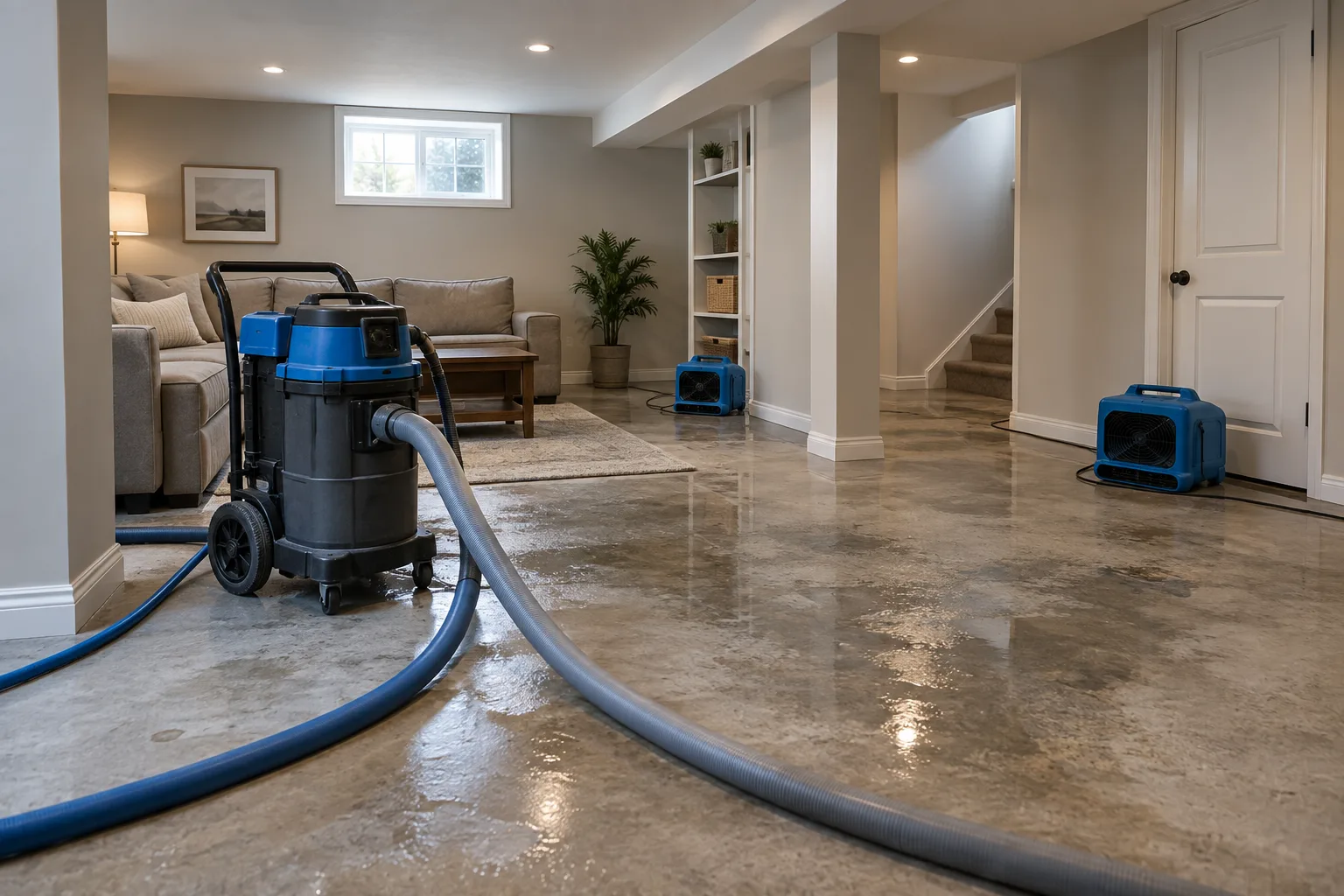
If your basement floods in Ottawa, keep people and pets away from the water, avoid electrical hazards, stop the source of the water if it can be done safely, document the damage, and contact your insurance provider. For significant flooding, professional water extraction and drying should begin as quickly as possible to reduce damage to flooring, walls, furniture, and other building materials.
What Should You Do First When Your Basement Floods?
The first priority is safety.
Do not enter a flooded basement if there is any possibility that the water has reached electrical outlets, appliances, wiring, or your electrical panel.
Standing water and electricity are an extremely dangerous combination.
If your electrical panel can be safely accessed from a completely dry area, you may be able to shut off power to the affected area. Never walk through standing water to reach an electrical panel.
Floodwater may also contain sewage, bacteria, chemicals, or other contaminants, particularly when water has backed up through a floor drain or sewer line.
Keep children and pets away from the affected area until you know it is safe.
Find Out Where the Water Is Coming From
Once immediate safety concerns have been addressed, try to determine where the water is entering the basement.
Common causes of basement flooding in Ottawa include:
- Heavy rainfall
- Sewer backups
- Blocked floor drains
- Failed sump pumps
- Burst or leaking pipes
- Water heater failures
- Foundation leaks
- Window well flooding
- Poor exterior drainage
- Overflowing eavestroughs or downspouts
If a burst pipe, leaking fixture, water heater, or another plumbing problem is causing the flooding, shut off your home's main water supply if you can safely reach it.
If the water is entering through drains, foundation walls, windows, or the ground surrounding the home, shutting off the water supply will not stop the flooding.
Call a Professional Flood Remediation Company
Removing the visible water is only part of recovering from a flooded basement.
Water can travel underneath flooring, behind drywall, into insulation, inside wall cavities, and into other building materials that may remain wet long after the standing water has disappeared.
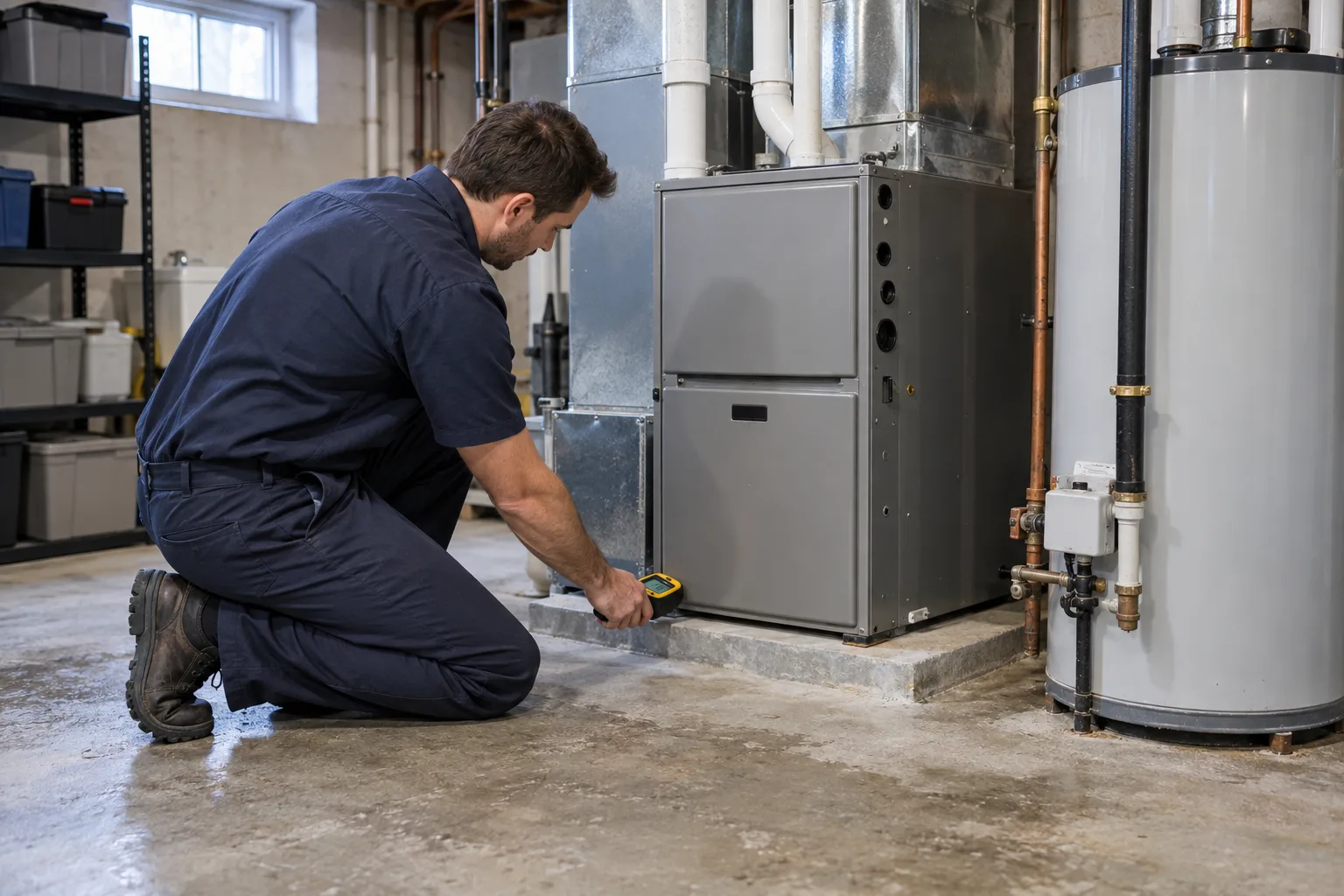
For significant basement flooding, contact a professional Flood Remediation Ottawa team as soon as possible.
Climate Works can help assess the affected area, remove standing water, begin the drying process, and identify areas where moisture may have travelled beyond what is immediately visible.
Acting quickly can help reduce damage and lower the risk of secondary problems developing after the flood.
Start Removing Water and Drying the Basement
For a very small clean-water leak, homeowners may sometimes be able to begin cleanup themselves using a wet/dry vacuum, pump, mop, fans, and dehumidifiers.
Larger floods require more extensive water extraction and drying.
The process may include:
- Pumping or extracting standing water
- Removing soaked carpet and underpad
- Moving wet furniture and belongings
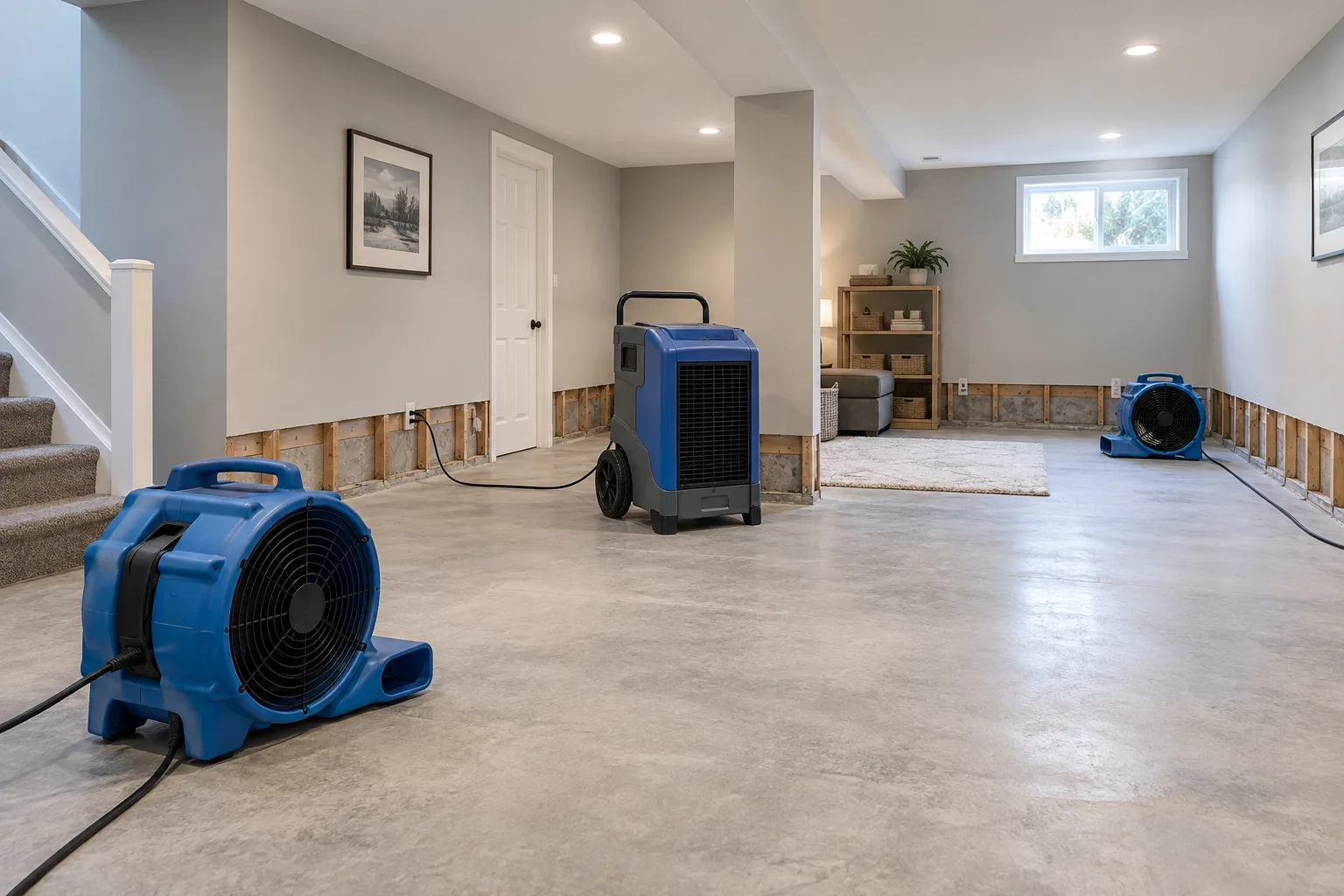
- Using commercial air movers
- Running dehumidifiers
- Drying walls and flooring
- Checking moisture levels inside building materials
- Removing materials that cannot be safely dried or restored
A basement can appear dry while significant moisture remains underneath flooring or inside walls.
That trapped moisture is one of the reasons professional drying equipment and moisture testing can be important following a serious flood.
How Quickly Can Mould Develop After a Basement Flood?
Mould growth can begin quickly when building materials remain wet.
Drywall, insulation, carpeting, wood, furniture, and other porous materials can retain moisture even after the visible water has been removed.
The sooner the basement is properly dried, the better your chances of reducing mould growth and limiting additional damage.
This is especially important during Ottawa's warm and humid summer months when damp basement conditions can remain favourable for mould growth.
Protect Important Belongings
Once it is safe to enter the area, move important belongings away from the water.
Prioritize items such as:
- Important documents
- Photographs
- Electronics
- Furniture
- Clothing and fabrics
- Valuable or irreplaceable belongings
Move salvageable items to a dry area where they can begin drying.
Before throwing damaged items away, take photographs whenever possible. Your insurance provider may need documentation of damaged property as part of a claim.
Document the Flood Damage
Take photographs and video of the basement before cleanup begins whenever it is safe to do so.
Document:
- The depth of the water
- Where the water appears to have entered
- Damaged flooring
- Damaged walls and drywall
- Furniture and personal belongings
- Appliances or mechanical equipment affected by water
- Water stains or visible contamination
Keep receipts and invoices for emergency work, cleanup services, equipment rentals, and repairs.
Good documentation can make the insurance claim process much easier.
Contact Your Insurance Provider
Notify your insurance company as soon as practical after discovering significant basement flooding.
Explain what happened and ask what documentation they require before damaged materials or belongings are removed.
Coverage can vary depending on the source of the water.
For example, insurance coverage for a sewer backup may differ from coverage for overland flooding or a burst plumbing pipe.
Do not assume that one type of water damage is automatically covered under another. Your insurance provider can explain the coverage included in your specific policy.
Should You Report Basement Flooding to the City of Ottawa?
During major storms or widespread flooding events, the City of Ottawa may ask residents to report basement flooding through 3-1-1 or the City's online reporting systems.
Reporting widespread flooding can help the City identify neighbourhoods experiencing drainage or sewer-system problems.
However, reporting the flood does not replace contacting your insurance provider or arranging emergency water removal and remediation.
How Can You Prevent Your Basement From Flooding Again?
Once the immediate damage has been addressed, determine why the basement flooded and whether changes can reduce the risk of it happening again.
Depending on the cause, prevention measures may include:
- Installing or replacing a sump pump
- Adding a battery backup sump pump
- Installing a backwater valve
- Inspecting sewer and drain lines
- Cleaning eavestroughs
- Extending downspouts farther from the house
- Improving grading around the foundation
- Repairing foundation drainage problems
- Addressing leaking plumbing
- Regularly inspecting basement plumbing and mechanical equipment
The correct solution depends on where the water originated.
A sewer backup, sump pump failure, plumbing leak, and foundation drainage problem all require different solutions.
Basement Flooding FAQ for Ottawa Homeowners
Can I clean up a flooded basement myself?
Small clean-water leaks may sometimes be manageable by a homeowner. Significant flooding, contaminated water, sewer backups, or water that has spread into walls and flooring should generally be handled professionally.
Should I enter my basement if there is standing water?
Not if there is any possibility of an electrical hazard. Keep out of the basement until you know the area is safe.
What should I do if sewage is coming up through my basement drain?
Avoid contact with the water and stop using plumbing fixtures in the home until the cause has been identified. Sewage-contaminated water should be treated as a health hazard and professionally cleaned.
How fast should I remove floodwater?
Water removal and drying should begin as soon as it can be done safely. The longer building materials remain wet, the greater the potential for damage and mould growth.
Will a dehumidifier dry a flooded basement?
A dehumidifier can help with drying, but it may not be enough after significant flooding. Water can remain underneath flooring, behind walls, and inside other materials that require professional drying equipment.
Should I call my insurance company before cleaning up?
Contact your insurer as soon as practical, but do not delay emergency work needed to make your home safe or prevent additional damage. Photograph and document the affected areas before removing damaged materials whenever possible.
What Should You Do If Your Ottawa Basement Is Flooding Right Now?
If you have discovered water in your basement, follow these steps:
- Keep people and pets away from the flooded area.
- Do not enter standing water if electricity may be involved.
- Stop the source of the water if it can be identified and controlled safely.
- Take photographs and video of the damage.
- Move important belongings to a dry location when it is safe.
- Contact your insurance provider.
- Contact Climate Works for professional flood remediation in Ottawa.
The sooner standing water is removed and affected materials begin drying, the better your chances of limiting further damage.
Need Help With a Flooded Basement in Ottawa?
A basement flood can damage flooring, drywall, furniture, mechanical equipment, and personal belongings in a very short period of time.
Climate Works Heating, Cooling & Plumbing provides professional flood remediation services in Ottawa to help homeowners remove water, dry affected areas, and begin recovering from basement flooding.
If water is currently entering your basement, contact our team as soon as possible.
